
Links & Episode Notes
Rupert Newland is a British entrepreneur. He founded Arenko in 2014 and serves as Chief Executive. Arenko provides large energy companies with enterprise-grade software to manage their asset portfolios, stakeholders and AI applications by unlocking performance from data, connectivity and automation embedded in its proprietary Nimbus software.
Under his leadership, Arenko has deployed Nimbus on some of the largest and most complex battery and renewables portfolios and has inked contracts with many of the world’s largest energy companies.
He previously established, grew, and exited a BESS owner-operator division of Arenko. Prior to founding Arenko, he spent seven years advising and funding renewables projects and trained as an Architect at the University of Sheffield..
About Arenko Group:
Arenko is the software company behind Nimbus, a platform that enables operators of complex, multi-technology BESS and renewables portfolios to manage and monetise their assets.
In a volatile energy market, Nimbus offers a secure and resilient enterprise-grade ‘digital backbone’ that is trusted by major utilities, Independent Power Producers and funds. It delivers market-leading asset control, performance monitoring and fully automated trading capabilities that enable portfolio owners to succeed amid complexity.
Originally incubated in the advanced UK battery energy storage system (BESS) market, Nimbus has now been deployed on over 1.2GW of utility-scale BESS, hybrid and standalone renewables generation capacity across the UK, Europe and the US. The platform is responsible for over 1.8TWh of traded power and over £150 million in revenue generated by Arenko customers.targeted to grow from near zero today to hundreds of millions of tonnes annually by 2050. OXCCU is building the technology to fill that gap.
Books and links mentioned
Orsted/Honsea project – https://arenko.group/arenkos-nimbus-software-to-operate-europes-first-battery-co-located-with-offshore-wind/
What It Takes: Lessons in the Pursuit of Excellence by Stephen A. Schwarzman,
Connect with Rupert Newland and Arenko Group
- LinkedIn: https://www.linkedin.com/in/rupert-newland-48892121/
- Company: https://www.linkedin.com/company/arenko-cleantech/
- Website: https://arenko.group/
About the Host – David Hunt
David Hunt is a cleantech thought leader, podcast host, and former executive search and solar EPC founder. As Non-Executive Chair and a long-time advisor to growth-stage and scaling businesses, he brings deep insight into leadership, energy transition, and the future of climate-focused industries. David supports businesses as a NED and Advisor via Stoa Advisory, and through his podcast and writing, David explores the people, ideas, and innovations shaping a more sustainable world.
- LinkedIn: https://www.linkedin.com/in/david-hunt-cleantech/
- Substack: https://davidhuntcleantech.substack.com/
About the Podcast
Leaders in Cleantech explores the people, ideas, and decisions shaping the energy transition. Through in-depth conversations with founders, CEOs, investors, and industry leaders, the podcast focuses on leadership, scaling companies, and the realities of building in a complex and rapidly evolving sector.
- LinkedIn: https://www.linkedin.com/company/leaders-in-cleantech-podcast/
- Website: https://leadersincleantech.com/
🎧 Sponsored by Hyperion Search
Hyperion Search is a specialist executive search firm focused on the cleantech sector.
The firm partners with startups, scaleups, investors, and corporates to build leadership teams and boards across clean energy, mobility, and infrastructure.
- LinkedIn: https://www.linkedin.com/company/hyperion-search-ltd
- Website: https://www.hyperionsearch.com
Feedback & Community
I’m always keen to hear feedback, guest suggestions, or topics you’d like explored in future episodes.
If you enjoy the podcast, please consider subscribing or leaving a review — it helps the show reach more people across the cleantech community.
Transcript
David Hunt (00:00)
Hello and welcome back to the Leaders in Clean Tech podcast. I hope those of you who’ve had a summer break enjoyed it and for those who’ve not yet had so, I’m sure you’re going soon. Please do enjoy. And now you have the added advantage of a new podcast to listen to whilst you’re away. So today I’m revisited, not something we do often, but revisited by a former guest, Rupert Newland, who’s the CEO and founder of Orenco Group. We’ve got some great new stories and headlines from…
David Hunt (00:26)
But there’s a lot of catching up to do since we were last speaking, at least on the podcast. Rupert could have you with us.
Rupert Newland (00:33)
David, thanks for having me. Really great to be back.
David Hunt (00:36)
Do remember exactly when it was? It’s almost good timing. I knew roughly when it was, but I just checked before we were recording. It was September, so almost to a year, but 2020, so six years ago.
Rupert Newland (00:47)
Yeah, I did check myself and there’s quite a nice symmetry to talking to you again at this point. We’re now at quite an important deal.
Rupert Newland (00:59)
a couple of days ago, which I know you’re keen to talk about today. But if you go back five years to when we were last talking, that was at a real sort of point for Arranco, in so much as we just sold the sort of infrastructure division of our company and we’re really setting out on the journey of focusing on selling software.
David Hunt (01:22)
Yeah, it’s been a great journey to have watched from the outside. again, obviously in parallel to a lot of changes that have happened broadly within the sort of the energy transition generally. And I would like to dig into that, but perhaps we can just give the headline on the deal because a lot of people would have probably seen it on LinkedIn and various other places. So perhaps if we can do the headline and then we’ll do the journey back to now and what exactly that might mean both for Orenco and for the industry more broadly. So the Hornseed IC &E project, give us at least the headlines of what’s going on there.
Rupert Newland (01:52)
Yeah, brilliant. This is a very exciting deal for Orenco working with a fabulous partner in Allsted. And so Allsted have selected Orenco to provide the digital infrastructure around trading, asset management and integrations to manage the connection, manage the trading, manage the operations of the Iceni battery, as you mentioned, which is a very large battery system. It’s a pretty iconic project. It’s 300 megawatts, 600 megawatt hours. So at that scale, it’s one of the largest
Rupert Newland (02:22)
ever built.
Rupert Newland (02:24)
But also, and I think what makes this particularly significant and also particularly complex, which really plays into a Renko’s strengths, is that it’s co-located alongside the Horn 63 Wind Farm, which is an offshore wind farm and it’s critical national infrastructure. It shares a connection point and so it’s a very, very important project attached to a very, very significant wind farm and it’s the first of its kind in terms of
Rupert Newland (02:53)
of a battery system being co-located with offshore wind.
David Hunt (02:59)
I mean, that’s, that is fairly critical. know obviously, and we’ll perhaps touch on this, that you have some expertise in co-location, but I guess primarily with solar, but this is actually say something quite novel and new. And I’m keen to dig into more of the complexities and the, of the project and also what that means both for the wind farm and for actually safe and for national infrastructure. But let’s jump back to when we were speaking last and almost like the founders journey. One of the things about the podcast that I’ve enjoyed over the years is looking at how
David Hunt (03:27)
businesses and founders have been on the rocky road of any startup, but particularly in cleantech. So as you said, Arenco started as a storage developer in the very, very early days of large scale storage. Perhaps you can share a little bit of what was the original picture and pick up on that last conversation five, six years ago when you just sold those assets.
Rupert Newland (03:50)
Yeah, sure. So back in kind of 2014, we set the company up and sort of at the time it was Roger Hollies and I in a sort of shared office space trying to work out how to, where the batteries could be used to help balance the energy system.
Rupert Newland (04:10)
And we set about on this concept of, let’s trial a small battery, let’s find a battery, and then use that to build up an infrastructure business. And we did that pretty successfully. mean, Bloxswitch was the largest battery that we built, which is a 41 megawatt battery system. It was the first one to enter the balancing mechanism, the first one to finance celery services, first one to trade the power markets. And whilst all of those things are very kind of commonplace today, we sort of felt like
Rupert Newland (04:40)
we were right on the frontier of deploying batteries into the market. We developed a big pipeline of projects.
Rupert Newland (04:50)
and ultimately constructed BlockSwitch and some other projects as well. But as part of that journey, we started to realise that there was an increasing need for flexibility to be managed in a different way to have traditional power trading happens. It’s much more real time, it’s much more data focused. Batteries come with themselves, their own kind of complexities in terms of their state changing in real time. So every action has a
Rupert Newland (05:21)
And so we started investing into our own kind of internal software infrastructure, software tools to help support our own asset portfolio. And it got to the point really where we kind of had two sort of separate business divisions where the software division wanted deployment across every single asset in the world as software divisions do. And the infrastructure division wanted…
Rupert Newland (05:49)
ownership of the software wanted the competitive advantage. so 2020, so just before I last spoke to you, we ended up selling the infrastructure division and focusing on turning what were internal software tools. And I make the point of internal software tools quite importantly, because that then sort of sets up the transition into what is now kind of enterprise grade software that’s used by many of the big energy companies to manage their flexibility.
Rupert Newland (06:19)
That journey over the last five years, I think is the critical thing here. We obviously have the basis and the knowledge going back for many years of what our customers have experienced, what our customers do while they’re building their battery infrastructure businesses, whilst they’ve got their trading capabilities. But really, we think…
Rupert Newland (06:40)
the exciting thing is to be able to deploy our technology into big energy companies. And so we set about, we started in 2020 offering optimizer services. You’ll be very familiar with a number of the optimizers that are out there. And we took the view that actually the real innovation that we can bring to the market is to develop this out into true enterprise grade software.
Rupert Newland (07:10)
which requires quite significant investment, but to be able to deploy into the very large trading desks to help them manage flexibility in real time and integrate their existing capabilities into a platform that allows them to operate in real time, generate competitive advantage, integrate assets into their portfolios.
Rupert Newland (07:30)
And that’s really what we’ve been focused on for the last few years. So obviously we’re mentioning, Austin today is a great deal we’ve done with them. They’ve been a customer of ours through their Carnegie Road asset for the last couple of years, which
David Hunt (07:44)
Mm-hmm.
Rupert Newland (07:45)
was then sold to Perigus, who are now a customer.
Rupert Newland (07:48)
And we count many of the big energy companies as users of our software, whether
David Hunt (07:54)
Yeah.
Rupert Newland (07:55)
that’s RWE, NG, Battenfoult. We’ve got a really good suite of customers that’s ever growing, and it’s a really exciting time to be part of a Renko.
David Hunt (08:06)
And part of that decision making at the time, which clearly makes sense, all things to some degree make sense when you have the benefit of hindsight. But there’s a lot of changes which we can again touch on in terms of what’s happened in that five, six year duration. But even just going back to the point you just made there, a lot of people assume clearly that project development and developing storage assets will be capital intensive and expensive, but developing software is cheap. But that’s not the case when particularly when you’re looking for stuff that is actually say enterprise grade and able to be dealing with these
David Hunt (08:36)
corporates. how did that change your both the team and your I guess fundraising stroke ability to fund and make that transition? Clearly you obviously I’m sure gained revenue from the sale of assets but again it’s quite a quite a big change to just say we just you know we just sold off this bit and carried on with this bit. There’s quite a bit more to it than that.
Rupert Newland (08:57)
Yeah, I mean there is a stark difference between having internal software tools on which you can set a service, so an optimization service. So optimizers, what you’re doing is you’re effectively subcontracting out your trading capability to a third party. And the optimizer will have lots of different pieces of software that is kind of held together by processes and people. And they will specialize in effectively trading other people’s assets on their behalf.
Rupert Newland (09:27)
What we’ve done is essentially put together the links in that chain, the processes, and turned that into a product that can be bought by a third party trading desk who want to build out their flexibility capability set. And we think that’s really important because ultimately we’re seeing a huge evolution in the way energy storage is used in the evolution of the markets overall.
Rupert Newland (09:56)
in a sort of growing market, ultimately we’ll see consolidation, we’ll see cost of capital winning the day where you’ve got heavy intensive infrastructure businesses. And our customers don’t particularly want to subcontract out all of their trading when they’ve got fabulous trading teams in-house, when they’ve got decades of experience. They want to use us to be able to integrate their own trading IP, their own trading know-how.
Rupert Newland (10:26)
and we can provide them with the sort of digital infrastructure the the end-to-end operating system on which they can leverage their own IP. And I think
David Hunt (10:34)
Yeah, yeah, makes sense. So.
Rupert Newland (10:37)
the second part of your question was in relation to
Rupert Newland (10:40)
to investors in building that out. And I think it’s worth highlighting, we’ve got a really tight-knit group of investors who’ve broadly been with us since the beginning. We completed as an important funding round, bringing on a new shareholder last year. But I think the thing that holds us together is people really share the vision of the business and the sort of rationale for why we’re doing it. Because it’s extremely hard to hit the level of quality when I talk about
Rupert Newland (11:09)
Quality, I’m referring to sort of levels of security, redundancy, resilience within software, which a procurement team with these big energy customers will really scrutinize as a route to procure from us. And so they’ve been a great set of investors. We’re all rowing in the same direction and they’ve really kind of got on board with the business.
David Hunt (11:35)
It’s interesting we’ll divert very, very quickly. We’ve had the pleasure of speaking to some of the board, but we’ve been interacting more recently. But I’d say it’s unique, but it’s certainly a little bit different that primarily cap table is family offices rather than going to sort of perhaps the more traditional VC route. I’m not sure if that was a decision or based on obviously your previous experiences or how that’s been because a lot of people, for good and for bad, you know, engage with a lot of VCs I’ve worked with over the years, good intent, but it’s a different kind of funding model than
David Hunt (12:04)
than probably those family offices that you or others are engaged with.
Rupert Newland (12:09)
I mean, ultimately, we’re trying to create a business that can create generational financial sustainability as well as anything else. And that’s quite dislocated from the traditional kind of VC world where there’s much shorter cycles. But I think it fits very well with what we’re experiencing where…
Rupert Newland (12:34)
A lot of growth comes from growth in the market, people building new assets, and that’s typically quite a long cycle process. so having a shared ethos around what we’re trying to create, I think, is really, really important. And that’s allowed us to fund the business in a private way with great shareholders. And we love having them on board.
David Hunt (13:03)
It’s a challenge, I guess, for them not being specifically VC or clean tech. VCs are such investors broadly. Just think about the dynamics or the dynamism of the markets, because obviously when we were first engaged, a 50 megawatt battery was something to be had. And it was a bit of a record at that time. You’ve obviously had the
David Hunt (13:27)
various changes to revenue stacks, to regulations, to capabilities, to battery costs, of course, and capabilities. So there’s all that changes. Five years in some degrees you think is a flash. My daughter’s just turned, the youngest daughter just turned 13. It feels like that was like three minutes. So five years in some regards is a really short time, but actually over that time there were significant changes on a constant basis.
Rupert Newland (13:49)
And we’ve seen that in a massive way.
Rupert Newland (13:52)
So, know, selling software to our customers, the average deal size that we now transact on has gone up by a factor of about six versus maybe two years ago. So that’s, I think, testament to a few things. First of all, the track record that we’ve created, the customer base that we’ve created, but also the maturity of the market as well and the way in which people are getting more confident in investing into batteries. And I would say also, you know, we are pushing hard into renewables as well.
Rupert Newland (14:22)
got a number of renewables customers. Co-location is a very important theme and clearly the Austin battery system is co-located as well and that’s from a suite of about, I think it’s 14 large scale grid scale batteries that are co-located and using our NIMBUS technology as well.
David Hunt (14:42)
How does that differ bringing back up to speed then with the Hornsea project? It’s a wind project. understand that it’s, as you say, I think you touched on it, it’s got shared infrastructure, shared grid connection. It’s not a standalone, it’s correlated, it shares a lot of that infrastructure. But it’s the first, as I understand it, in wind. How is that different or more complex than some of the co-located solar projects, for example?
Rupert Newland (15:06)
So in terms of different to wind, we actually have quite a lot of onshore wind on the platform. This is the first batch that’s co-located with offshore wind. And we’ve seen tons of different configurations, whether it’s DC coupled solar versus hybrid solar, wind, offshore wind, all of these different configurations come with them, their own complexity. And I think it’s a real strength of a raincoast that we’ve developed.
Rupert Newland (15:36)
this kind of library suite of abilities to be able to integrate these different assets together. And ultimately what you’re trying to do is model the behavior using real-time data of how these two independent assets can operate within this constraints that they have. And that depends on the configuration of the asset, depends on the preferences of the customer, what they’re trying to achieve from the asset, but the combined asset group.
Rupert Newland (16:06)
But yeah, they all absolutely come with their different complexities and the Icini asset has a whole new set of complexities because it’s connecting in at the same point as the critical national infrastructure of the offshore wind farm.
David Hunt (16:23)
So how does Nimbus as a software, how does Nimbus sort of decide, because I wouldn’t say they’re sort of flitting, but they’re certainly typically slightly different objectives or capabilities from the generation and from the storage asset. And perhaps at times when you have, say for example, a really windy day, how does Nimbus decide whether to charge the battery, discharge the batteries, export directly to the grid, or how are those decisions not necessarily from a technical or given any secret source away, but just generally how is that process born out?
Rupert Newland (16:51)
Yes, so we have within Nimbus what we call a configurable constraints engine and what that really is is something which creates the rule sets between the different assets and then has all the data in real time that allows you to then operate around that rule set. So an obvious example might be if
Rupert Newland (17:18)
If you’ve got a hybrid asset where the solar takes priority over the battery on the grid connection, you have to constrain the battery to then in times when there’s high solar generation. But that might be very different for different assets and different configurations. So you’ve got to understand what are the inputs around creating that rule book. And then importantly, you’ve got to have the data in real time and be able to optimize.
Rupert Newland (17:43)
that integration point and it’s a really key point of maximizing the value of any co-located project.
David Hunt (17:50)
Yeah. Again, I think when you touched on something before in the sense that everybody’s talks about obviously AI and automation, but clearly as much as I’m sure a lot of that is involved, you’ve touched on before, it’s actually a support tool for some very smart traders, not a replacement for them.
Rupert Newland (18:04)
Yeah, this is really critical. Our customer base on the whole have already got very established trading desks. But they also recognise that trading flexibilities are slightly different ballgame to trading the kind traditional assets. So our pitch to them is really about leveraging the capability set that they have. We’re not trying to replace their IP, in fact, completely opposite. want them to…
Rupert Newland (18:33)
to be able to maximise the value of their IP and
Rupert Newland (18:39)
but we can offer everything in that end-to-end chain so that they can kind of pick and choose which parts they want to integrate with. And I think we’ve talked quite a lot around the integration of Nimbus with the asset, but the other side of it is the integration of Nimbus with the trading desk and the customer and the customer systems and processes. And that’s in turn a really important integration.
Rupert Newland (19:03)
And I’d say the third one is integrating with third party features as well. So a lot of our customers want to have a particular feature from a particular customer and they want to run it off the digital infrastructure, the data, the data layer that we have within Nimbus. And so we turn all of this connectivity and we want to make it really easy, really straightforward for our customers to connect into their asset, to operationalize their data, to allow them to improve.
Rupert Newland (19:33)
their trading, their asset management and ultimately their overall technology stack.
David Hunt (19:40)
Yeah. Have you managed that internally? Cause again, going back from being a developer of projects to the business that you are now, it’s quite a transition we touched on, actually maintaining and keeping the people and Roger’s obviously involved from the very beginning, sort of key talk, key members who are able to make that transition. But clearly I’m sure there’s been a lot of need for, different types of people to do different types of things. How has that been able to manage? Cause know you’ve always had a really strong and very, as a family orientated, that’s not.
David Hunt (20:06)
bit cliched but you’ve got a really strong culture within the business as I’ve known it for the last five six seven years or more.
Rupert Newland (20:12)
Yeah, absolutely. I mean, our team is amazing. We’re about 60 people of which two thirds are directly in the product and technology team. You know, we’ve got a big focus on the customer. What does the customer want? How can we always strive to make our product better for the customer? But you’re absolutely right. We are.
Rupert Newland (20:33)
night and day versus where we would have been five years ago when we last spoke. It’s a real high performing technology team that we’ve developed and we’ve got some real serious leaders in this organisation who are very prepared to operate on what we kind of describe as the frontier of the market and really try to push the boundaries of what’s possible.
Rupert Newland (21:01)
What we find is that we get experts in from other sectors who are excellent at doing their job and they very quickly become domain experts in very specific, very detailed areas of the overall energy system. And that’s a joy for us to see, particularly given our background is in the energy system originally when, know, Roger and I were much younger.
David Hunt (21:28)
Yeah, I actually had Roger on the Modo podcast not long ago. Roger’s obviously a great guy, but obviously from a technical perspective, a great asset to have in the business. Looking at some things perhaps.
Rupert Newland (21:39)
He’s
Rupert Newland (21:40)
superb, quick flag to him. I think he’s absolutely sensational and I’ve loved working with him over the last 11 years.
David Hunt (21:48)
Yeah, yeah, no, a smart guy. Not a bad musician, I believe, also. But so looking again where perhaps outside of Renko specifically look at the market spin through this evolution, we all know that offshore wind has had a real tough time of it over the last few years for various different reasons. The project obviously is still yet to be fully implemented. But what are the potential outcomes for the broader energy transition and offshore wind that come from if the ISEAN project
David Hunt (22:17)
does what it’s anticipated to do.
Rupert Newland (22:20)
I mean, first of all, I think we’re going to see a sharp uptick in co-located projects around the world really. We’re already seeing quite significant relaxations in the regulatory processes to co-locate alongside solar in Iberia, for example. And I think they obviously experienced blackout a couple of years ago and this is one of their responses to it. But more importantly, I think what we’re seeing is a world that is
Rupert Newland (22:49)
there’s increasing levels of volatility in the system and what co-location can do, what batteries can do, is to really internalise strategic value for these bigger players who’ve got very, very diverse and very diversified and very large portfolios.
Rupert Newland (23:08)
that need to be ultimately balanced. And I think that’s where the real opportunity comes to this market. And I do think we’ll see an increasing amount of consolidation as these big energy companies really try to scale up their operations because they’ve got such an internal value driver for them.
David Hunt (23:28)
How do you see the size of battery? Talking again, 50 megawatts was fairly substantial not so long ago and now you’re looking obviously 300, 600 battery at Hornsey with ISIS. Looking at how much negative pricing has been across Europe, some parts more than others and the increase in that as we get more renewables on stream. How does that sort of lend itself to the size of batteries and therefore the sort of the co-location and the optimization of those batteries? Because there are
David Hunt (23:58)
increasing times when again those assets are essentially running at a negative cost.
Rupert Newland (24:04)
I mean, look, negative pricing as a general rule is superb for a battery because it means you can charge your battery and be paid to do so. But what we’ve seen is an evolution. when we’re talking about 50 megawatts being a large scale battery system, it’s still quite a big asset in its own right today. But almost all of them were built on a merchant basis. so we’ve seen the financing structures very much evolve over the last few years as well. So, know, first of all, flaws
Rupert Newland (24:33)
implemented which offered a downside protection to the asset owner and then more recently we’ve got tolls and then I think that a toll effectively is a rental of capacity by a bigger organization who has a strategic value for that flexibility and then the sort of other extreme of that is the big energy companies who are building their own assets so that they’re not just renting the capacity they’re actually owning the capacity as well.
Rupert Newland (25:03)
And I think that’s a trend that’s going to continue. We see that there is value in standalone assets for sure, but there is so much more strategic value for the big energy companies as they look to balance their overall portfolio. And whether they’re doing that through tolling, through building or acquiring assets themselves, and whether or not it’s co-locating or having standalone, they’re still running these vast, very diversified portfolios that have an ever-evolved
Rupert Newland (25:34)
risk profile that’s regularly changing as a consequence of increased volatility, almost as a function of their own success in terms of building renewables out.
David Hunt (25:44)
Yeah, yeah. On that again, we’ve been fortunate in the UK, I guess, over many years, it’s almost been like a bit of a sandbox. It’s been very much the lead in many aspects of the storage evolution. your customer base is essentially, know, pan-European, if not global, utility organizations. What does that opportunity arise for Orenco and for the technologies and the solutions that you’re able to provide? You obviously saw…
David Hunt (26:13)
I know it’s not the same thing. We saw Kraken obviously going quite big in the US not so long ago. But what does that mean for Orenco in terms of the types of project and evolution that you see for the business in the next few years?
Rupert Newland (26:25)
Yeah, so we built Nimbus. We built the platform as a global platform. Now, clearly there are configurations in each different territory that we need to go into. But what our kind of strategy has been is to build up a really strong track record in the UK. We’ve got some projects in Texas. We’ve got some projects in Germany. We’re increasingly fielding inquiries around Iberia and we see that as a very attractive market for co-location.
Rupert Newland (26:55)
We’re doing a little bit in Ireland. But we’re right on the start of our internationalization journey and we’re kind of scaling up our business to be able to support that international growth in a major way. And that kind of fits hand in glove with the evolution of our customer base and, know, targeting the kind of pan-European energy companies comes with it, pull of moving into new markets as well. And we want to be able to support them and offer them a full service across their
Rupert Newland (27:25)
their entire estates and we see that journey time and time again with every customer. You start with a project, then you move on to multiple projects, then you start to win portfolios and then you get into that kind of true enterprise scale deals where you become a really important part of their overall flexibility business.
David Hunt (27:48)
And again, part that looking forward, perhaps just to get your view on, it’s always impossible. I’m actually perhaps a little bit of a crystal ball of how the next few years pan out. mean, of course, we’ve got at least it seems, you know, continual cost decline, obviously, new chemistries to some degree coming through. Obviously, a lot more assets or a lot more generation assets coming onto the marketplace. But then there’s some physical challenges like the heatwaves that we’ve had in all those other places which can impact on operations.
David Hunt (28:14)
So there’s still quite a lot of complexity, I guess, as much as there is the demand for the clean energy transition to continue and to accelerate. Again, just finger in air a little bit to see how you see the next few years, certainly across Europe and the UK, of the evolution of the clean energy sort of transition from a storage perspective.
Rupert Newland (28:38)
So, I I think there’s a few points here. First of all, we’re going to continue to see people building out assets, but I think we’re also going see quite significant consolidation of the market as well, driven by a number of the challenges that you mentioned. Where are those challenges biggest? Well, they’re actually biggest at the big energy company level.
Rupert Newland (28:58)
who are looking to enter the space, they’ve also typically got the lowest cost of capital so that they can be quite inquisitive. And we see lots of deals of big energy buying assets to build into their portfolio. And so I think we’re going to see quite a big increase in…
Rupert Newland (29:18)
in kind of market share and sort of dominance of the big energy companies. And that’s precisely why kind of a few years ago we decided to focus on selling the software rather than just the optimization service.
David Hunt (29:30)
Yeah. Yeah.
Rupert Newland (29:31)
So, you know, I’d argue it plays very strongly into a Renko’s hands and I think we’ve built a really, really credible and strong track record with some of the best organisations in this space. And so, you know, I’m very excited about the future from a Renko perspective. And I think from an energy system perspective, it is also pretty exciting, you know, that there is a lot of construction going on. don’t want to undermine the challenges. And I think the other one that you
Rupert Newland (30:01)
that you didn’t mention was the grid constraints. I think that’s a big, big challenge that people are trying to overcome. There’s also potentially vast increases in load through data centers that are planned. So there’s a massive evolution. This is the start of this transition rather than moving towards an end game.
David Hunt (30:23)
Yeah. And the, the complex in the type of organization and software and software that Nimbus is there’s, there’s, there’s obviously an awful lot of hype around lots. Some of, and some great companies, by the way, some have been on the podcast, but specifically aimed at the flexibility market. Do you find that people perhaps have a misconception of exactly what Orenco and its software suite does compared to a lot of these sort of automated, they’ll go driven flexibility plays, which are,
Rupert Newland (30:50)
I
Rupert Newland (30:51)
mean, we definitely, in the early days, got typecasters as an optimizer, but that’s because we were providing optimization services. And we still do to a certain extent, but it’s a much smaller part of our business where we do it generally to support our customers in their, know, support our software customers where they essentially want very flexible contracts to…
Rupert Newland (31:16)
deliver that sort of end game of building out their flexibility trading desks.
David Hunt (31:23)
What’s the timeline for the Asini project in terms of it becoming operational and then being able to really see the proof of the pudding, so to speak?
Rupert Newland (31:31)
Yeah, so I mean this is a pretty quick turnaround on the asset and it should be fully operational in first quarter of next year. So it’s
David Hunt (31:39)
okay.
Rupert Newland (31:40)
already well underway of construction and you know it’s a real asset that’s going to be live roasting.
David Hunt (31:51)
Okay, I know you mentioned, Bimu, we talking before that you’re hopefully going to, after this deal has announced everything that’s happened, take a little bit of a break, but there must be some big challenges again for you personally managing the business through this next change and sort of next sort of evolution of the energy transition. What are some of the things that, I won’t say queue you up at night, but what are some of the things that perhaps challenge you most in the running of a business going through this kind of transition?
Rupert Newland (32:18)
First of all, wouldn’t say this is a big change. This is something that we’ve anticipated for quite a long time now and we’ve geared our business around addressing exactly that point. I think we couldn’t be better positioned to…
Rupert Newland (32:32)
to sort of move into this next phase. That being said, there are obviously always challenges and know, there was, you know, I go back to grid delays, know, delaying projects is as frustrating for us as it is for our customers. There’s not a lot that any of us can really do about that.
Rupert Newland (32:51)
And that creates pressures. And so that’s been one thing that kind of keeps me up at night. Ultimately, I want to realize the ambition of deploying our Nimbus technology across all of the big energy companies and creating this operating system that allows them really to operate in real time to harness their IP and to grow their businesses in the way that they want, where they can maximize the value of their portfolio and deliver value to their shareholders.
Rupert Newland (33:22)
and if we can all do that then everyone’s happy but I think we’ve really laid the groundwork to it.
Rupert Newland (33:27)
As you scale any business, there’s various challenges and none of them will be unique or new to a Renko, but I think we’re as well positioned to be able to respond to it and we’ve got the right team to do that, we’ve got the right customer base, we’ve got the right shareholders and I think we’ve absolutely got the right strategy and we should be able to weather any storms that come in our direction.
David Hunt (33:54)
Let’s hope so. Actually, never know what’s around the corner. But again, the testament is that so many people I find still have this perception because there’s a lot of it in there. I guess, in the Instagram world, we live in the sense that you start a business and a new IPO in three years, but consistently to actually grow a physical business to any great scale and situation often is a 10-year journey. And you’re obviously well into that. it’s our ability to
David Hunt (34:24)
meet those demands. Let’s not forget, it’s not that long ago that COVID hit us all and also the challenges that that was, you know, once in a century kind of event. yeah, there’s so many, I think, opportunities and challenges that a business, if you’ve got the right people, the right business, the right funders with the right kind of patience and timeline and the right sort of direction of travel that you’re able to navigate these things. But it’s been great to see your journey and the team’s journey over that last period of time.
David Hunt (34:51)
Almost the same parallel to a lot of those changes that have happened in the industry as a whole Aside from the holiday. What are you looking forward to for for the for this sort of coming year or so I guess getting this project up and running and
Rupert Newland (35:04)
Yeah, getting this
Rupert Newland (35:05)
project up and running, we’ve also got a whole load of other projects, both who signed up and were on boarding at the moment, and also the sort of late stage prospective customers who are coming on. we’re looking forward to welcoming a whole load of new customers, growing our existing customer base, and also growing and supporting the journey of all of our customers as well. We talk about the route to trade, and that’s something which…
Rupert Newland (35:33)
and all of our customers, we plot them on a map and we can see them evolve over time, both in terms of the size of their assets, what they’re looking to bring in-house, what they’re not looking to bring in-house, and ultimately how can we support them on the journey that they’re going on.
Rupert Newland (35:48)
And that gives everyone here at Arranco a massive thrill to be able to be part of that journey with our customers. And, you know, think it’s, we always say sort of momentum builds momentum. And I think there’s certainly some momentum around what we’re doing at the moment. And it’s a very exciting time.
David Hunt (36:06)
Yeah, no exciting. I’m glad we were able to get the podcast in coordination with that recent news. So we’ll obviously share on the episode page links to the news story and to A.R.R.N.C.O. so that people can find out some more. I got back into the habit of asking people for recommendations, particularly around sort of books or things where people that have either inspired you or encouraged you or even just given you a bit of an escape over the years. Anything from that perspective, any book recommendations or things that have…
David Hunt (36:35)
really been a go-to or have inspired you or supported you along the journey.
Rupert Newland (36:40)
I mean the great book that I love and I’ve come back to a couple of times is Stephen Schwartzman’s In the Pursuit of Excellence. He’s the Blackstone founder and chief executive and he talks about creating a unique ability to solve very complicated problems by focusing on the two or three inputs that actually matter. I think it’s a tremendous piece of advice.
David Hunt (37:02)
Okay, well we’ll certainly share that. I’ve got a big bookcase, not that this is just the touch of it, but most of it has come from recommendations from founders I’ve spoken to over the years. So I’ve not actually read that one. So I’ll take that out and put a link into the episode page. But it’s been really great to catch up again. Obviously it’s been really great to see, or at least have some light touch involvement over the years with the Renko and with yourself and testament to this project and to really interested to see what happens in the next few years.
Rupert Newland (37:29)
Awesome, David, thank you so much for having me. Great to chat and really good to catch up.
 https://leadersincleantech.com/wp-content/uploads/2026/09/2025-Profilbild-LT-Gideon-Schwich-1.png
800
800
EdwardLamb
https://leadersincleantech.com/wp-content/uploads/2025/04/LIC-2025-300x245.png
EdwardLamb2026-09-14 15:50:202026-09-16 07:46:15Dr. Gideon Schwich – cylib
https://leadersincleantech.com/wp-content/uploads/2026/09/2025-Profilbild-LT-Gideon-Schwich-1.png
800
800
EdwardLamb
https://leadersincleantech.com/wp-content/uploads/2025/04/LIC-2025-300x245.png
EdwardLamb2026-09-14 15:50:202026-09-16 07:46:15Dr. Gideon Schwich – cylib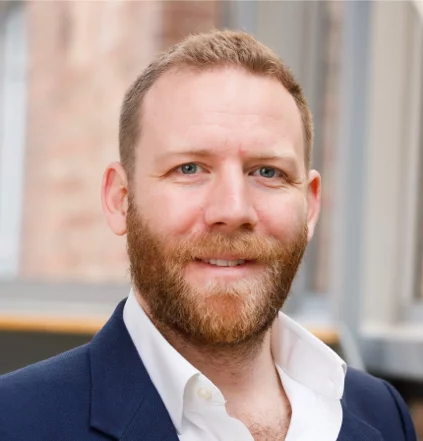 https://leadersincleantech.com/wp-content/uploads/2026/08/iStock-1284795077-Copy-2.jpg.webp
441
423
EdwardLamb
https://leadersincleantech.com/wp-content/uploads/2025/04/LIC-2025-300x245.png
EdwardLamb2026-08-22 15:15:352026-08-24 12:13:38Rupert Newland – Arenko Group
https://leadersincleantech.com/wp-content/uploads/2025/04/LIC-2025-300x245.png
0
0
EdwardLamb
https://leadersincleantech.com/wp-content/uploads/2025/04/LIC-2025-300x245.png
EdwardLamb2026-07-10 13:48:122026-07-10 14:25:11Hyperion Q2 2026 Market Review
https://leadersincleantech.com/wp-content/uploads/2026/08/iStock-1284795077-Copy-2.jpg.webp
441
423
EdwardLamb
https://leadersincleantech.com/wp-content/uploads/2025/04/LIC-2025-300x245.png
EdwardLamb2026-08-22 15:15:352026-08-24 12:13:38Rupert Newland – Arenko Group
https://leadersincleantech.com/wp-content/uploads/2025/04/LIC-2025-300x245.png
0
0
EdwardLamb
https://leadersincleantech.com/wp-content/uploads/2025/04/LIC-2025-300x245.png
EdwardLamb2026-07-10 13:48:122026-07-10 14:25:11Hyperion Q2 2026 Market Review