
Links & Episode Notes
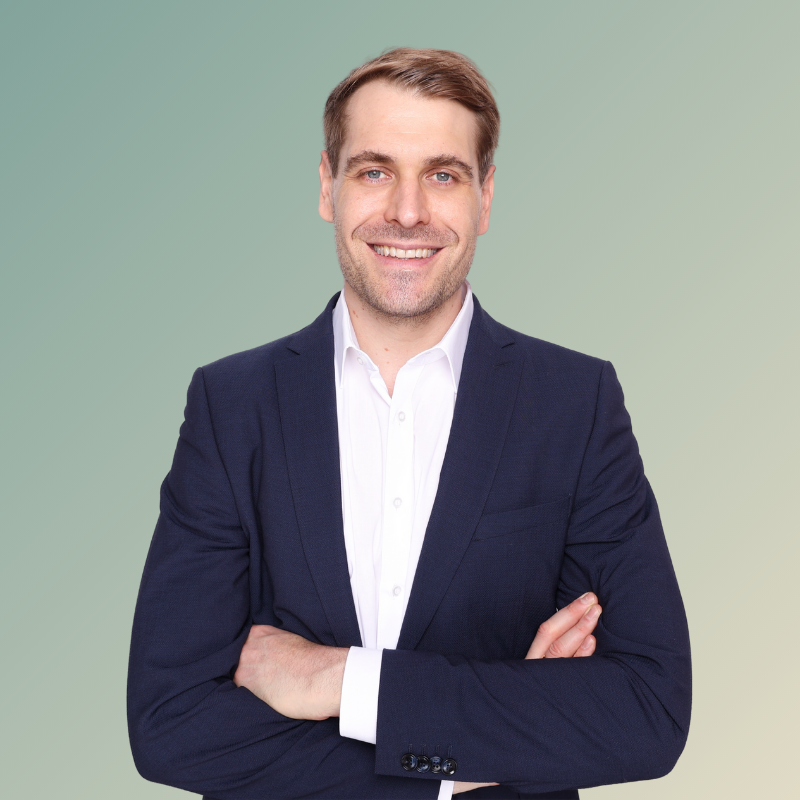
Dr. Gideon Schwich co-founded and co-leads cylib GmbH in 2022 alongside Dr Lilian Schwich and Paul Sabarny. He holds a PhD in Production Engineering/Metallurgy from RWTH Aachen University. Before co-founding cylib, he led the Sustainability practice at umlaut/Accenture, managing a team of consultants and advising major European automotive OEMs and aerospace manufacturers on sustainability strategies. His extensive sustainability consulting experience and operational leadership have been instrumental in scaling cylib’s operations and driving strategic growth.
About cylib
cylib is a holistic and sustainable battery recycling company founded in 2022 in Aachen, Germany, by Dr. Lilian Schwich, Paul Sabarny, and Dr. Gideon Schwich. The company emerged from research conducted at RWTH Aachen University to produce advanced materials for sustainable batteries and resilient European value chains. cylib operates an integrated network across Germany: research and development at the Aachen headquarters, hydrometallurgical processing in Dormagen (under construction), and mechanical processing in Bavaria.
The water-based OLiC (Optimized Lithium and Graphite Recovery) technology efficiently recovers raw materials from battery packs, black mass, or production scrap, achieving over 90% recovery rates for lithium, graphite, nickel, cobalt, and manganese with an 80% reduced carbon footprint compared to primary extraction, enabling true material circularity.
Books and links mentioned
Connect with Gideon Schwich and Cylib
- LinkedIn: https://www.linkedin.com/in/gideon-schwich/
- Company: https://www.linkedin.com/company/cylib/
- Website: https://www.cylib.de/
About the Host
David Hunt
David Hunt is a cleantech thought leader, podcast host, and former executive search and solar EPC founder. As Non-Executive Chair and a long-time advisor to growth-stage and scaling businesses, he brings deep insight into leadership, energy transition, and the future of climate-focused industries. David supports businesses as a NED and Advisor via Stoa Advisory, and through his podcast and writing, David explores the people, ideas, and innovations shaping a more sustainable world.
- LinkedIn: https://www.linkedin.com/in/david-hunt-cleantech/
- Substack: https://davidhuntcleantech.substack.com/
About the Podcast
Leaders in Cleantech explores the people, ideas, and decisions shaping the energy transition. Through in-depth conversations with founders, CEOs, investors, and industry leaders, the podcast focuses on leadership, scaling companies, and the realities of building in a complex and rapidly evolving sector.
- LinkedIn: https://www.linkedin.com/company/leaders-in-cleantech-podcast/
- Website: https://leadersincleantech.com/
🎧 Sponsored by Hyperion Search
Hyperion Search is a specialist executive search firm focused on the cleantech sector.
The firm partners with startups, scaleups, investors, and corporates to build leadership teams and boards across clean energy, mobility, and infrastructure.
- LinkedIn: https://www.linkedin.com/company/hyperion-search-ltd
- Website: www.hyperionsearch.com
Feedback & Community
I’m always keen to hear feedback, guest suggestions, or topics you’d like explored in future episodes.
If you enjoy the podcast, please consider subscribing or leaving a review — it helps the show reach more people across the cleantech community.
Transcript
David Hunt (00:01)
Hello and welcome to the 171st episode of the Leading Cleansep podcast. Great to have you back with us. Today joined by Gideon Sweetsch of Sihelab, who’s the CEO and co-founder, co-CEO and co-founder actually, which is something we can dig into, of Sihelab, which is a fantastic battery recycling business based out of Germany. Lots to talk about. Gideon, firstly, firstly, welcome to the podcast.
Gideon (00:26)
Hi, David. I’m very happy to be here.
David Hunt (00:29)
Great. So as I was talking slightly before we started recording, it’s a fascinating topic. We have had the Send Elements and Hans-Erik Mellon and others in the recycling space on the podcast in the past. But I’ve been really watching you guys for the last, I guess, six, nine months. I know you’ve been around longer, but some really good news stories which we can talk about in terms of the evolution of the product line and obviously funding and the likes. perhaps we can start a little bit with just a high level view of what Salib is all about and then we can take a deeper dive afterwards.
Gideon (00:59)
Sounds great. I’m really looking forward to that conversation.
Gideon (01:03)
Xylip is a battery recycling company. I think what really stands out about Xylip is the technology that my co-founders Lilian and Paul have developed. They started very early. think Lilian was a researcher back in 2015. She built a battery recycling practice, et cetera, was joined by Paul. And they developed the technology that is capable of recovering Elysium water-based, graphite water-based. And that overall led us to a process.
Gideon (01:31)
that is capable of recovering all elements from an end-of-life battery. And as you know, we are dependent as Europe on imports for raw materials. And we scale the companies through the past years to around 100 employees today, three sites. So was a quite exciting journey so far.
David Hunt (01:48)
It sounds like we’re going to obviously take a bit of that journey with you, but let’s talk a little bit about that because the company, I should say, was spun out of the University of Arkham by Lillian and yourself and others in terms of that early start of the journey. What led you initially to join and to sort of go down the entrepreneurial path? I guess as with any spin out, is this something perhaps that could have been licensed earlier or even oftentimes technologies just left on the shelf, unfortunately?
David Hunt (02:15)
How do you decide with Lilian to actually found the business and how did that early stage challenge you and how did that go?
Gideon (02:25)
I would say the side really is like a typical deep tech or a university spin out stories all of the challenges that we had there and with other things that can go well I mean obviously the story is not not at the end yes but a few things went very well and so let’s you let me talk to you a little bit through through how the journey started as mentioned
Gideon (02:46)
The originator of the technology is Lilian. She started very early to research in that topic. And when you go back to 2015, the world looked different then. mean, resilience, sustainability, et cetera, it was not on the focus like it was today. So she started in a totally niche topic at the time, at least in Europe, in battery recycling. And she started with research on the technology.
Gideon (03:16)
and then was later joined by Powell. And I wasn’t part of the lab. I was a consultant at that time and therefore looked at the things from a different angle. Lilian and Powell, they really looked very deep into the technical challenges. If you looked at the technologies at that point, there were just a few technologies capable of recovering lithium in Europe. There were…
Gideon (03:43)
most technologies are very focused on nickel and cobalt, so there was no holistic approach, I would say. And from my perspective in consulting, it was very clear that electromobility, electrification of basically everything is a mega trend. And based on, they saw it from the technical perspective that there is a clear gap. And I thought from the business perspective,
Gideon (04:12)
It started to be like a hobby where we met on Sundays, where we met in the afternoons and brainstormed on how those things could be brought together. That ultimately then led us to founding the company in 2022.
David Hunt (04:27)
Okay. And that’s a, you say the world is very different because on two fronts, think firstly, of course, on the geopolitical and the sustainability or resilience point of view, if you touched on is much more of a topic now than that it was. And, most many of us, I started in clean tech in 2020, 2007, 2007. So many of us saw the transition for solar and batteries and EVs in advance. But if you look back 10 years ago, when that research Lydian was doing was, was, was starting, as you say,
David Hunt (04:56)
People had a hint of the direction of travel, but in terms of how these last 10 years have grown in terms of battery evolution, density, capacity, e-mobility, it’s still massively different now than it was then. So there must’ve been a real confidence that the direction of travel would be there for you.
Gideon (05:18)
so.
Gideon (05:20)
If we look at the battery market, or let’s have an even broader look, not just batteries for mobility, batteries for stationary storage, but maybe even batteries like a cell phone or so.
David Hunt (05:33)
Mm-hmm.
Gideon (05:35)
It was very clear that batteries will be there. And it was very clear that battery technology will stay developed, will still evolve.
Gideon (05:48)
Therefore, it was very important to have a research-based approach that is capable on the one hand to recover advanced critical raw materials because it’s really battery materials, advanced materials. And on the other hand, as a recycling company, you are like a waste treatment company. So you need to be very agnostic. You need to have the capabilities to take everything, to bring in a battery from a Porsche, but also from a cell phone and maybe even from computer or so.
Gideon (06:17)
And I think it was very clear that the waste problem will be there, that there will be a solution needed and that there are solutions, but there are better solutions needed. And on the other hand, think also on a mega trend level, it was clear that raw materials would be needed. So would say the general thesis was very clear, we very confident that it’s going to be needed. But obviously,
Gideon (06:42)
We didn’t know how things play out and to be honest, we don’t know how things play out in the next 10 years, but it’s still clear that it’s needed.
David Hunt (06:49)
Yeah, yeah, absolutely. But that must have been one of the challenges, you said, obviously lithium and graphite, some of the core elements there. But we’ve moved from, obviously there’s still transitioning happening, but we’ve moved from sort of NMC to LFP and obviously sodium is on the horizon. So is the technology robust to be able to evolve as the makeup of batteries is evolved?
Gideon (07:11)
I say we have some advantages in comparison to what you see in the market, but we also have obviously some challenges that we still have to tackle. A major advantage that we have is the deep expertise that we have in the company. Lilian as a researcher was able to bring in other researchers. So I would say there are few companies with such an in-house expertise like we have. We brought in people from
Gideon (07:39)
BSF, Rubes, like all the big companies you have in Europe. And that helps you to adapt your technology to all the changes, to all the developments that you have. This is like on the what we have in people. The second advantage is the process itself. The process is a process that is focused on lithium. So whether it’s an NMC battery or an LFP battery or an LCO battery or so.
Gideon (08:09)
Lithium is part of that and therefore if you have the capability to recover lithium cost efficient and sustainable, it helps you a lot. But we also have challenges. You address sodium ion batteries. So this is something that we have to tackle. But if you have such a strong research team like we have, then you’re obviously on the forefront of process development there. We’re part of several research clusters, et cetera. And so I think we’re very well positioned there.
Gideon (08:38)
you have constantly to evolve the company, have constantly to improve the technology to stay as part of the trends.
David Hunt (08:49)
Yeah, yeah. Let’s talk about that a little bit. thing because you talked about and obviously referred as a deep tech company. Now, one of the big challenges, of course, in deep tech is to move from a research to a lab and then from a lab to a pilot and then to as you have done, as I’ve seen, large scale production or facilities. So how was that early stage breaking from the lab to having something which you could then create a business model around and create a funding model around?
Gideon (09:23)
I think you first of all, you have to make sure that you have great people around you because you will probably underestimate the challenges that you have to tackle when scaling the technology, when scaling the company. And we were very fortunate to have very strong people around us. People like 65 years plus XPSF people.
Gideon (09:51)
but also people who founded companies themselves, exited very successful. And that helped us a lot to, I would say, focus on the essential things. That helped us on the one hand to build a demo plant very quick and in a very professional manner. So also important, I think, when building a technology company. And on the other hand, it also helped us obviously to
Gideon (10:21)
build the company in a way that is attractive for venture. This is also part of the truth. every production company is fitting in there. And so I would say the key for us was having people around us who have done the things that we’re doing and then assemble those things and bring them together.
David Hunt (10:43)
Yeah, that in itself can be a challenge. I mean, I’ve been in the sector long time and a lot of that has been around people and currently I’m an NED for technology companies. So having those people and experiences behind you is very useful as you alluded to there, but it’s not always easy to attract them or for founders sometimes to be so open to their self-awareness to understand where they need that level of support often.
David Hunt (11:12)
There’s a level of arrogance which is also needed to a degree as well in a founding team.
Gideon (11:19)
Yeah, this is a very interesting thing. I think you’re always on the edge. On the one hand, you need to listen. On the other hand, you probably need a little bit of arrogance also. Because if you would do the things exactly like the people from the big corporates are doing or did before, no way that you’ll be successful with such a small company with
Gideon (11:47)
small headcount with very limited resources. So you have always to juggle between is that an advice that I take on an FYI information or is it something
David Hunt (11:59)
You
Gideon (12:00)
that I really implement in the daily business? Still a struggle. I think it’s incredibly fun to be there in the mix all the time.
David Hunt (12:14)
Yeah, as you said, that’s the fun part of the journey to have that balance of doggedness and arrogance, but also to be receptive to the news around you. You also touched on something, Gideon, that’s also relevant and important. Having the technology, the greatest it may be, needs funding, particularly for deep tech and some elements of cleantech. So the funding, which we can talk about, you’ve achieved, of course, but…
David Hunt (12:38)
At what point did you start to structure the business and the process with a view that you would need to raise capital at some point and then are going into that process, I think World Fund, my good friends Daniel and a part of the cap table, but that sort of mindset of on the one hand, you’ve got to concentrate on evolving the technology, but equally at some point, as you say, you’ve got to create the business which is attractable and investable.
Gideon (13:05)
Very early in the journey. think in 2022 early we decided that we found a company and it became very clear very early in the process that
Gideon (13:21)
It will be a company that will take either decades to bootstrap or will need external funding. I mean, imagine what battery recycling is. Battery recycling is process. Let’s go with a battery from a Porsche Taycan. It weights right around 500 kilograms, so half a ton. If you get that battery, you have to dismantle it and you have to discharge it at the beginning. So you need people.
Gideon (13:51)
And since the battery has obviously high voltage, you also need strong health and safety measures there. Then you go into mechanical processing. That means you treat the battery mechanically, you shred it, you solder it, you produce flakes, intermediate products, etc. So this is like really heavy machinery that you use there.
Gideon (14:16)
Then you go into thermal treatment, go into hydrometallurgy, so chemical processes again. High capex equipment only works at large scale. We saw that if you want to be part of that market that is really evolving that fast like it’s doing, like it’s doing now, you need to catch up with the market and you need resources for that. In that case, money and people. Money.
Gideon (14:46)
who bring in the people also. And therefore for us it became very clear that we will rely on investors, on banks, on building that company. Because otherwise we would have scaled that company when the trend is already there. Then we would have a lot of probably Asian competitors sitting here who have started the process 10 years earlier because part of the truth is the Asian ecosystem is ahead of us.
David Hunt (15:14)
Yeah, yeah. That’s actually says creating that environment where people can can invest because you need that to accelerate and obviously, as you say, people and money, you have the money, at least you had some investment. Is it Maytime earlier this year from World Fund and a couple of others that are putting the ticket earlier this year?
Gideon (15:33)
So we had several financing rounds so far. WordFund was the lead investor in the last financing round. It was a 55 million euro financing round. We received, maybe with strong investors, but we also have strong backing from public funding, received grants from the German Ministry of Economic Affairs, North-Westphalia Ministry of Economic Affairs. And I think this is, you touched on it earlier, sometimes it is hard to convince people that the product that you have
Gideon (16:02)
is needed. For us it was pretty easy. It is a no-brainer. Everyone knows the raw materials are needed and batteries are there. So it was relatively easy on the one hand to make sure that people want to be part of SILAB’s mission. But on the other hand it was very clear for also for politics, not only for investors, but also for politics, that this is a matter that we have to tackle. therefore I think we…
Gideon (16:31)
we had a comparatively easy job to bringing a lot of believers.
David Hunt (16:35)
Yeah, Sometimes timing is important for founding as much as anything else. as you say, there’s obviously an acceptance
Gideon (16:41)
What 100 %?
David Hunt (16:43)
and an understanding that this is a journey which is which is not going anyplace other than forwards. Let’s talk about that because you’ve got talked about the funding you received there. And I think you mentioned 100 plus now employees in a very short period of time, 2022 to where we are now four five years. Perhaps you can talk about how SILIB is now where you are in the journey. What are the sort of
David Hunt (17:03)
What are the facilities that you have presently and what is the current market? And then we can look a little bit to the future.
Gideon (17:12)
Yeah, so when we founded the company, we started building a demo line in Aachen in Germany. Aachen is a very known university in Germany, Europe, very strong technical expertise. And I would say
Gideon (17:26)
probably one of the best places for building a demo line because you have a lot of ex-researchers, a lot of young, motivated people that can build such a demo line in light speed and also run such a demo line and do process development there. But those people have never run a company at large scale. They have never been, I want to quote Elon Musk here, through production hell.
Gideon (17:55)
I think this is something that is very different, the demo line level versus going into actual production. And when going into actual production, you need people who have done that before. So for us, was clear that Aachen is the right place for the demo line for the R &D. But when scaling, we need to go to places where we have the people for that. And therefore, started building our first
Gideon (18:24)
hydrometallurgic, so the chemical line in Dormagen in Germany. The hydrometallurgy Dormagen is like in between Cologne and Düsseldorf. It’s like a lot of chemical industries there.
David Hunt (18:34)
Yeah.
Gideon (18:34)
You have Covestro, have all the large names there, Langsess, et cetera. We are currently in the building process of that facility. And this is like, when you remember how I looked at the value chains, it’s like the second part of the value chain.
Gideon (18:52)
This is like the refining, producing the material that can go back to the battery value chain. Before that, need to have the dismantling, need have the mechanical processing, etc. And for that we acquired a company this year. We had the start of operations now. And this is in Bavaria. This is a company that can process 10,000 tons of batteries per year.
Gideon (19:21)
10,000 tons of batteries per year equals right around 20,000 EVs per year. And we’re doing like the discharging, the mechanical processing there. And then we have that intermediate product that can be fed into the Dormagen line.
David Hunt (19:36)
Okay. And this is all very complex. It’s easier to talk about, and we just do this and this, but all of these things are very complex and expensive processes. And as you say, having the people who’ve been through those hells is quite a challenge, having spent 12 years in tele-exited the Hyperion, was developing or finding these people who’ve been through this pilot production scale. They’re very few and far between. So that’s in itself quite a challenge. The other thing I guess is…
David Hunt (20:03)
talking perhaps broadly of the marketplace, there’s, I think from certainly when I first started getting involved in batteries nearly 10 years ago, there’s obviously in terms of how long they’re lasting in EVs, for example, is much longer than a lot of people anticipated. The degradation through various things is much less than was anticipated. So how are you looking at the supply? Of course, we’re seeing sales of EVs going exponentially and long may that continue. But there’s still some years before those become.
David Hunt (20:33)
second life and then ready for recycling. So how is the feedstock situation in Europe?
Gideon (20:37)
I would say there several angles to look at it. First, I would start with the
Gideon (20:49)
Asian ecosystem, especially China. You asked for Europe, I answered with China, but we come to
David Hunt (20:53)
Mm-hmm. Okay.
Gideon (20:55)
Europe later. When looking at the Chinese ecosystem or the Asian ecosystem, we see that it started like in 2008 or so with the five-year plans to really ramp up the whole ecosystem. Throughout the time, lot of vertically integrated companies were built. I look at CRTL.
Gideon (21:18)
They do everything from the mine to the battery,
David Hunt (21:19)
Yeah.
Gideon (21:21)
cathode active materials, pre-cam, recycling even, and are very much integrated into the cars now. Look at BYD. They’re even building the car. They’re doing the battery, they’re doing the mining, they’re doing everything. But also if you look at Gaoshan, et cetera, so all those Chinese players are incredibly vertically integrated.
Gideon (21:44)
This helps you on the one hand in terms of your own supply chain, it helps you in terms of your margins, it helps you in terms of a lot of power that you have in the market. And now look to Europe. In Europe you obviously have batteries since like 30 years or so. Not longer probably. I’m not talking about lithium ion batteries but also alkaline batteries etc. So you have an infrastructure in Europe to treat those batteries.
Gideon (22:13)
It was waste treatment. It was shredding of the batteries and then trying to make sure that you get the… I mean, even alkaline batteries, they have value components. So then you make sure that you have the right outlets, the right partners for bringing in those value streams into the right companies, to the right partners. But you don’t have that vertically integrated players in Europe. But if you look at the battery value chain, you see that
Gideon (22:44)
the trends that you have in China will come also to the rest of the world, in this case Europe and the US. So those vertically integrated players are built right now. And Sylip is like the first player that is really building that vertical integration from the mechanical processing to the hydrometallurgy and going even deeper to the battery. And this gives then, and now I’m finally answering your questions, so sorry for the very long introduction, but this gives us a pretty good access to the feedstock.
Gideon (23:14)
Because we see that the car manufacturers, for them it is a waste treatment problem, but they also want to have a clear view on how they can get back the material at some point. And since Silapus is the only company or one of very few companies capable to have a credible path to return the material to them at some point, this gives you a very big advantage. So in general, would say feedstock is increasing towards the past years.
Gideon (23:43)
It is at right around 100,000 tons per year currently. It will be at more than 2.4 million tons in a few years. So we’re just at the beginning of the growth. But with the holistic approach that Scilop has, we have a clear edge there in what you see with the competitors.
David Hunt (24:02)
Okay. If look at that journey, actually on one hand you have the feedstock supply and the other hand you have off-takers, if you want to put it the people who obviously take the refined process materials. Are they typically the same people? Because again, as you said, there’s not an awful lot of battery manufacturing at this time at least. how is the, I guess, the supply chain, how much of the battery, for example, is typically…
David Hunt (24:30)
made back into a user more material and where do they typically go at the present time.
Gideon (24:40)
I would start with drawing three buckets of feedstock suppliers to sell it. So you have cell manufacturers look like Powercore, Vercore, ACC, etc. Those cell manufacturers, they have production scraps. And that means output that is not usable, that needs to be recycled urgently. Those players obviously have a high interest in having the material recycled and getting the material back in a way that they can use it for new cells.
Gideon (25:09)
This is very easy from an economic perspective. And it’s also from the logistics model relatively easy because you know where the facilities are. So you know where the scrap occurs. Second bucket is a little bit more complex. It is like the car manufacturers. It is like VW, BMW, Renault, et cetera. They have end of life batteries from test vehicles, from
Gideon (25:38)
from leasing, etc. And this is for the big OEMs, several thousand tons per year each. So this is like a large number, but it is a little bit more complex because it is distributed across Europe. I mean, it comes back to the VW facilities or comes back to the Renault facilities also. That is a little bit more complex. And also the batteries are very hard to
Gideon (26:07)
forecast when they will come. And the third bucket, this is really messy. This is cars that go end of life, end up at a scrapyard, etc. end up on the Autobahn. This is like a lot of collection work. This is not what a company like Seilb does. This is like what companies like Remondes,
David Hunt (26:24)
Yeah.
Gideon (26:27)
Veolia, etc. do. And those companies work together with recycling companies. So for a company like Seilb,
Gideon (26:37)
It is very important to build relationships with all of those. And as you see from the description, the scrapyard does not have any interest in getting their material back. The cell manufacturer wants to get the material back. So you have therefore to work in different commercial models with them. For the one, you are a waste treatment company. For the other, you are a full service provider.
David Hunt (27:01)
Yeah, make some complexity to the business model from the business perspective, from your developing of that, because as you say, it can be quite complex. Who is your source is not necessarily who is your supplier and vice versa. that must be quite difficult to manage when you do have a fluctuating situation. Of course, there’s an awful lot of Chinese companies, vehicles coming into Europe at the present time, probably will for maybe forever, certainly for some time.
David Hunt (27:31)
So I’m assuming they don’t all head back to Asia. Maybe there is a recall from CATL or BYD to a degree, but I guess there’s a lot of product that will come back to you. how is it, if you weigh up the challenges from a technical point of view, which you touched on, which are complex and you have Lilian leading the way there, from a business perspective, there’s also complexity in looking at how the future markets will be from a business model point of view.
Gideon (27:58)
Yes, high
David Hunt (28:00)
You
Gideon (28:00)
complexity everywhere. High complexity on the tech side, on the business side, internally also in growing the company.
Gideon (28:11)
I don’t want to my life too easy, but you need a lot of good people for that. But let’s go maybe to the business side. For Germany, we are currently the exclusive recycling partner for Porsche. are for the Basstor the exclusive European recycling partner. We are also the exclusive European partner for Cherry, a Chinese car manufacturer. So what I want to say with this is you need to make sure
Gideon (28:39)
that you come in those larger agreements with the OEMs directly to have like a certain amount of a certain level of forecasting your input, your feedstock. If you would just rely on the scrapyards, you get the better prices. You get the best prices when getting battery from a scrapyard. But it makes it more complex. It makes it very hard to forecast.
Gideon (29:08)
And therefore you really have to balance the three buckets that I explained. And since they also have different approaches, said, the self-manufacturer wants a full service provider, the scrapyard wants just to get rid of the battery. They also talk different languages. You need people that are capable of talking with the people at the scrapyard and you need people that are
David Hunt (29:35)
Yeah, yeah.
Gideon (29:36)
capable of talking with the OEM.
Gideon (29:38)
And most of the time those people are not the same. this is then coming back again to the company and to the growth of the company. You need to have a very interesting mixture of people.
David Hunt (29:50)
Yeah, it’s really interesting point because there’s something again, having worked for many years in that in that space of people. I always used to refer to them as translators. not necessarily translating from a linguistic point of view, from a language point of view, but but in but more from semantics or syntax kind of point of view of, how do you talk to this type of customer? How would you talk to VC and the funding people on one hand, but how do you talk to corporates? How do you talk to scrap yards, which obviously there are some large organizations in that space, of course, but
David Hunt (30:18)
typically it’s a very difficult, I should say mindset and a difficult language type. it’s a, that’s one of the challenge to build the team. Maybe we can touch on that a little bit because you’ve referred to quite a bit of how important people are, which is fantastic to hear, but it’s not always easy to build those teams and to acquire and get those people working well together. So how is the culture, if you like, and how is the people element of the business that you’ve managed to create so far?
Gideon (30:49)
We have one overlaying culture, but obviously then you have nuances of the culture in the different teams. You have different culture in the commercial team, like the hunters and deer closers. Then you have the blue-collar people, the people working really at the mechanical processing facility. Then you have the technological people, so a lot of nuances.
Gideon (31:19)
us, it was very important from the beginning that people who join SILIP understand that SILIP is an opportunity for them, but also an opportunity for Europe and Germany. And that at the same time SILIP brings certain requirements or SILIP has certain expectations. So SILIP is not like your average job if you work at SILIP.
Gideon (31:49)
you will probably have more fun. You will probably have more ownership. You will have probably more degrees of freedom than you have elsewhere. But it is very important to understand that every tech person, every sales person, every operator does not sign up for a 9 to 5 job when joining Sylab. Not at this stage. are a company that is constantly growing. We are a company that is here to…
Gideon (32:20)
to beat the incumbents and that will require a lot of effort from everyone joining. And
David Hunt (32:27)
Yeah.
Gideon (32:27)
so for us it was about finding passionate people who really want to do what they’re doing, finding people who are excellent in what they do, and people who really want to collaborate with each other because this is such a big opportunity what they can do together. And those are three of our core values. What is very important when bringing in those people.
David Hunt (32:48)
Yeah, and that can be a challenge for those people who are both competent, of course, like the or attracted by the excitement and the building or something, but equally understand there’s an accountability to go through that. You have, of course, freedom, but you also have accountability that you need to, as you say, put in the extra yards or shift, however it might be, to to evolving a business. Let’s talk a bit.
Gideon (33:09)
Yes, so
Gideon (33:11)
one point, because you address the fourth core value, this reliability, this goes hand in hand with accountability, would say, because at the end, it’s a company that is producing things. It’s a company where you have to have a very strong health and safety culture. So reliability is also key for us. So those are the four core values. Thanks for bringing that up.
David Hunt (33:33)
No, accountability is critically important in any business because especially as you say, everything is critical and everything is always being made up as you go along a little bit, unlike being in a corporate environment. So let’s talk a little bit about that journey from your perspective. You’ve gone off to you from a strong academic experience to into consulting and now building a deep tech company with all the challenges we’ve touched on. How has that journey been for you? What have the bits maybe have been the highlights for you and which of the bits that you found was challenging?
Gideon (34:05)
I think so usually when I look at my past jobs including like doing the PhD research, consulting etc. I think I wanted to have jobs with a high impact and I’m obviously not nine to five jobs.
Gideon (34:25)
And I think I got that with founding Silo.
David Hunt (34:25)
Mm-hmm.
Gideon (34:29)
And this is incredible fun for me because the level that you have is so incredible. You really can move things. You really can set up processes. You really can take bold decisions. This is like something that is a lot of fun. On the other hand,
Gideon (34:56)
You also asked about challenges and I think when building such a complex thing like a company, you see a lot of challenges and you see challenges all the time. And the bigger the challenge, the higher the likelihood that it ends up on your desk. And I think on the very early days, like first six months, first 12 months, you have like a 12 person team or so, five person team.
Gideon (35:26)
It is like everyone is friends. Everyone is sitting in the same room. Communication is easy. when you’re in that growth trajectory, also everything feels very easy. But suddenly you’re like 70 persons, 80 persons, 100 persons, and you’re then not sitting in the room with everyone. So communication gets more complex. You have to make sure that you have precise information flows.
Gideon (35:57)
that gets people the context that they need for their respective task. And at the same time, you also don’t have always the context when a challenge comes to you. mean, usually the challenge comes with the context, or the context comes with the challenge. But that makes it then hard to not to deal with the challenges, but they might feel harder at some point. And I think it is probably not
Gideon (36:25)
not something unusual in founding a company and building the company and growing the company. But the challenges become more, the challenges become bigger and I like it. I like to deal with challenges.
David Hunt (36:39)
Yeah. Well, that’s the thing of the CEO, isn’t it? Or the founders, the, and a number of founders have had on the podcast have talked about this same element is as you say, you, as you, can’t just have the conversation around the table because the tables are in different places at different times now. But as you grow the things that land on your desk or the CEO is, are always the, the shitty stick, if you like the worst things, because easy things somebody else is dealing with because they’re easy things. So it’s the hard things that end up on your table, which
David Hunt (37:08)
Actually, it brings the bigger challenges that I guess keep
Gideon (37:08)
Okay.
David Hunt (37:11)
you motivated and excited, but of course challenged as well.
Gideon (37:15)
Yeah, but I think what I like so much about it is that you learn so much. When we founded the company, a friend of us, he exited to Xilinx, then to AMD, a software company. He said, you’re going to put like a 20 to 30 year career.
Gideon (37:42)
in five to 10 years. And I told him, yeah, blah, blah, And now I understand what he meant. I mean, you have like, so,
David Hunt (37:51)
it.
Gideon (37:52)
mean, when I look at CYLEP, we built a demo plan, we acquired a company, we hired people, we saved business contracts. Obviously there were challenges that we had to deal with. So you did in a very short time, a lot of things that some people never do in their business life.
Gideon (38:12)
And I think this is very exciting.
David Hunt (38:15)
Yeah, it’s very intense, isn’t it? But also, I should say, very exciting and part of the founders joy and journey. It’s great to hear again. Thanks for sharing some of those personal as well as the business growth journey for for for silent. Perhaps if we can look a little bit at the crystal ball, it’s difficult to see, of course, in the geopolitical situation and other things. But how do you see the next maybe four five years as a timeline for for both the recycling market, maybe more broadly in Europe, but more specifically around silent? What are the
David Hunt (38:45)
What are we likely or hopefully going to see over the next few years?
Gideon (38:52)
I think this sounds probably very lame because everyone says it. I think we’re at a pivotal point for Europe. If we start to build a battery industry now, we can have a battery industry. If we don’t do it, Europe will never have a battery industry. It will be like solar also. It will be something that will be imported.
Gideon (39:17)
probably from Asia. then we gonna deal with those challenges. So from the bigger picture, I think we are in a situation where people have to move with a high urgency. And this goes also for battery recycling. If we don’t build a battery recycling industry now, we won’t have it. Then it will be in Asia. And with silo we’re going all in. And I think
Gideon (39:46)
There is a higher likelihood and obviously this is plan that in the few years, Sylip is the European market leader, the company capable of recycling batteries end to end, supplying raw materials back into the value chain. It looks like Sylip is also the only company doing that. I don’t think that would be good. I think we need other companies like Sylip. But I see the highest likelihood at Sylip and we have to do that.
Gideon (40:16)
But we also have to understand that we also need the battery industry. need everything around that. as Germany, we as Europe, we have to move. We have to move with high urgency.
David Hunt (40:28)
Yeah, it’s been a frustration. I’ve kind of sat on and been around Cleantech for some time. I’m sure you’ve had some involvement there. I remember being at a meeting a couple of years ago now with the Draghi report in terms of how European competitiveness. And again, there still seems to be a lot which hasn’t been implemented, but there are some good signs. I think recently, again, in Germany, this state aid thing has helped to make, I guess, some investments. So there’s certainly news progress, but it makes for
David Hunt (40:54)
a challenge to run a business when again, there are always so many moving parts, some in your control, some completely out of your control.
Gideon (41:03)
Yeah, and when.
Gideon (41:07)
Especially the things that are out of our control are sometimes just incredibly slow, especially when they’re triggered by the European Union.
David Hunt (41:17)
Mm-hmm.
Gideon (41:18)
was in Brussels the other week. They said, well, we’re doing this and that, and then we’re super happy because it will be effective in 2030. I was like, what? What? We have 2026? So I understand you’re doing your job there, and you’re probably doing your job the best that you can.
Gideon (41:36)
We cannot talk about like four years, five years. We have to move now. And this is frustrating with the things that you cannot influence. The things that we can influence internally, also with our customers, with our partners, we can do everything to move them as quick as we can. But especially when it goes to regulatory, especially when it goes into politics, it is a frustration that it’s so slow. And this is
David Hunt (42:02)
Yeah. Yeah.
Gideon (42:03)
a problem. It’s not a challenge, it’s a problem.
David Hunt (42:06)
Yeah, and has been for some time and still is as we alluded to, but obviously one has to hope that the broader situation where there are these challenges for obvious reasons going on in the world, a true recognition, not just of the problem, which I think everybody recognizes, but now actually, as you say, it’s a now problem, not a let’s get around to it problem. And hopefully
Gideon (42:25)
Yeah.
David Hunt (42:26)
the powers that be in Europe and the governments of Europe will take some decisive action and start to support companies like yours and others who are.
David Hunt (42:36)
ready and waiting to scale. That’s the big challenge, isn’t it? To scale. You need smart people, need good money, but you also need the right environment to do that.
Gideon (42:49)
Yeah, 100%.
David Hunt (42:50)
Yeah. Well, you certainly have the first two, so I’m glad to hear that. And let’s keep our fingers
David Hunt (42:54)
crossed on the third. But Gideon, it’s been great to share a little bit of your journey and Salibe’s journey so far on the podcast. We’ll share, of course, links to the website and other places. But yeah, it’s been great to hear the story, but it’s also exciting to see where that story goes in the next few years.
Gideon (43:11)
Thanks a lot. It was a lot of fun, and let’s catch up soon.
David Hunt (43:14)
Thanks, Gideon.
 https://leadersincleantech.com/wp-content/uploads/2026/09/2025-Profilbild-LT-Gideon-Schwich-1.png
800
800
EdwardLamb
https://leadersincleantech.com/wp-content/uploads/2025/04/LIC-2025-300x245.png
EdwardLamb2026-09-14 15:50:202026-09-14 15:50:20Dr. Gideon Schwich – cylib
https://leadersincleantech.com/wp-content/uploads/2026/09/2025-Profilbild-LT-Gideon-Schwich-1.png
800
800
EdwardLamb
https://leadersincleantech.com/wp-content/uploads/2025/04/LIC-2025-300x245.png
EdwardLamb2026-09-14 15:50:202026-09-14 15:50:20Dr. Gideon Schwich – cylib https://leadersincleantech.com/wp-content/uploads/2026/08/iStock-1284795077-Copy-2.jpg.webp
441
423
EdwardLamb
https://leadersincleantech.com/wp-content/uploads/2025/04/LIC-2025-300x245.png
EdwardLamb2026-08-22 15:15:352026-08-24 12:13:38Rupert Newland – Arenko Group
https://leadersincleantech.com/wp-content/uploads/2025/04/LIC-2025-300x245.png
0
0
EdwardLamb
https://leadersincleantech.com/wp-content/uploads/2025/04/LIC-2025-300x245.png
EdwardLamb2026-07-10 13:48:122026-07-10 14:25:11Hyperion Q2 2026 Market Review
https://leadersincleantech.com/wp-content/uploads/2026/08/iStock-1284795077-Copy-2.jpg.webp
441
423
EdwardLamb
https://leadersincleantech.com/wp-content/uploads/2025/04/LIC-2025-300x245.png
EdwardLamb2026-08-22 15:15:352026-08-24 12:13:38Rupert Newland – Arenko Group
https://leadersincleantech.com/wp-content/uploads/2025/04/LIC-2025-300x245.png
0
0
EdwardLamb
https://leadersincleantech.com/wp-content/uploads/2025/04/LIC-2025-300x245.png
EdwardLamb2026-07-10 13:48:122026-07-10 14:25:11Hyperion Q2 2026 Market Review